
June 10, 2026
Three Decades in the Service of Faith and Charity
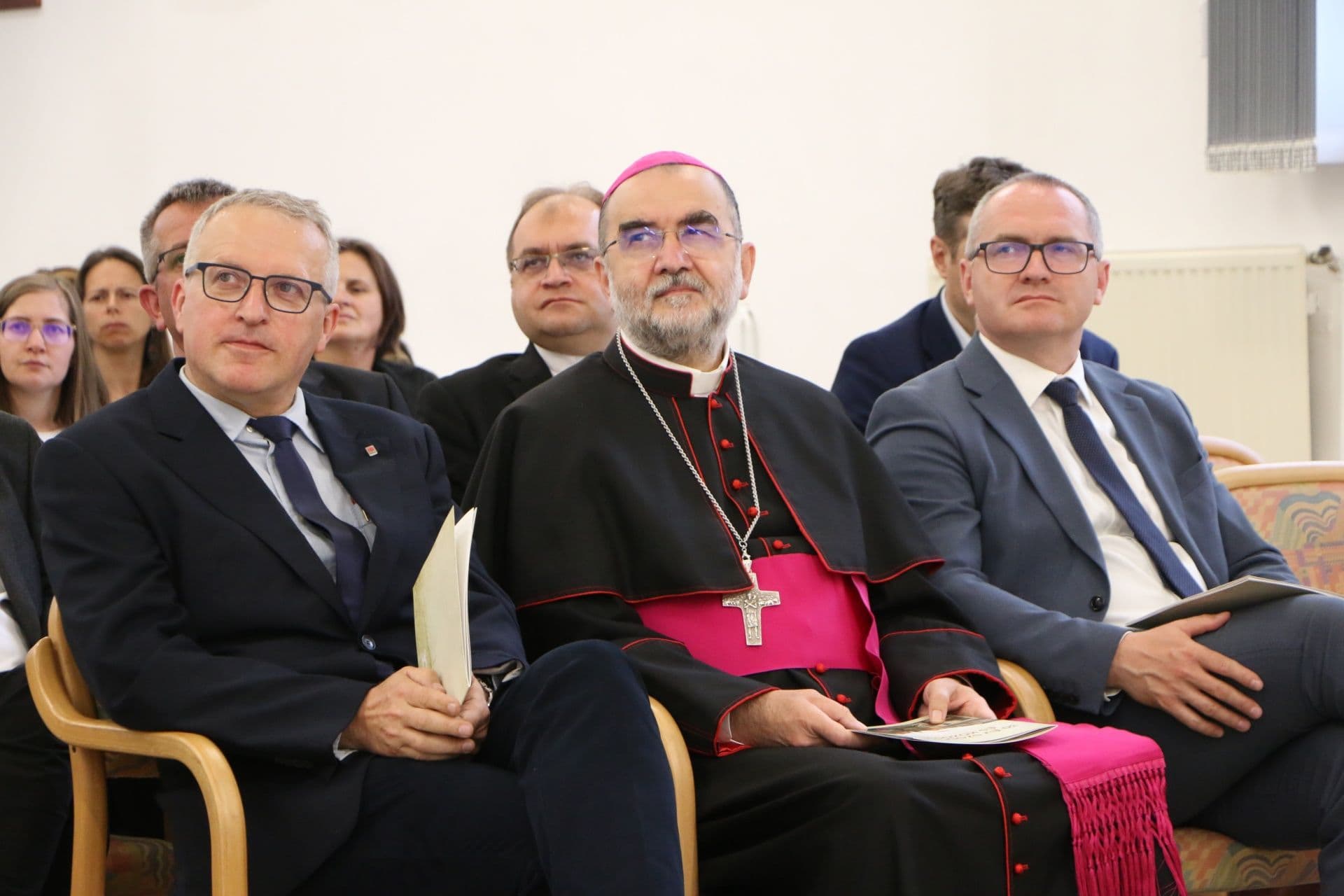
On 2 June, an anniversary celebration was held at Jakab Antal House in Șumuleu Ciuc, marking the establishment of the institution and its thirty years of service.
Today, Jakab Antal House is a dynamic institution that has remained faithful to its original goals established in 1996, while significantly expanding the scope of its activities. It serves both as a study centre hosting conferences and spiritual retreats and as a stronghold of the Caritas mission. Its work currently rests on five mutually reinforcing pillars: hospitality, vocational training and event organisation, social assistance – including the provision of a daily hot meal to more than 500 people in need in the region –, sheltered employment and day-care centres.
Department Director György Péter presented these activities, placing particular emphasis on sheltered and inclusive employment. The House provides people with special needs with opportunities for employment and personal development, thereby supporting their social inclusion. Future plans include creating a herb garden, making the premises accessible by installing a lift, and extending the successful social and economic model to other communities. Guests were welcomed into this vibrant environment, and the event was honoured by the presence of several archdeacons, priests of the archdiocese, representatives of partner institutions and the mayors of Miercurea Ciuc.
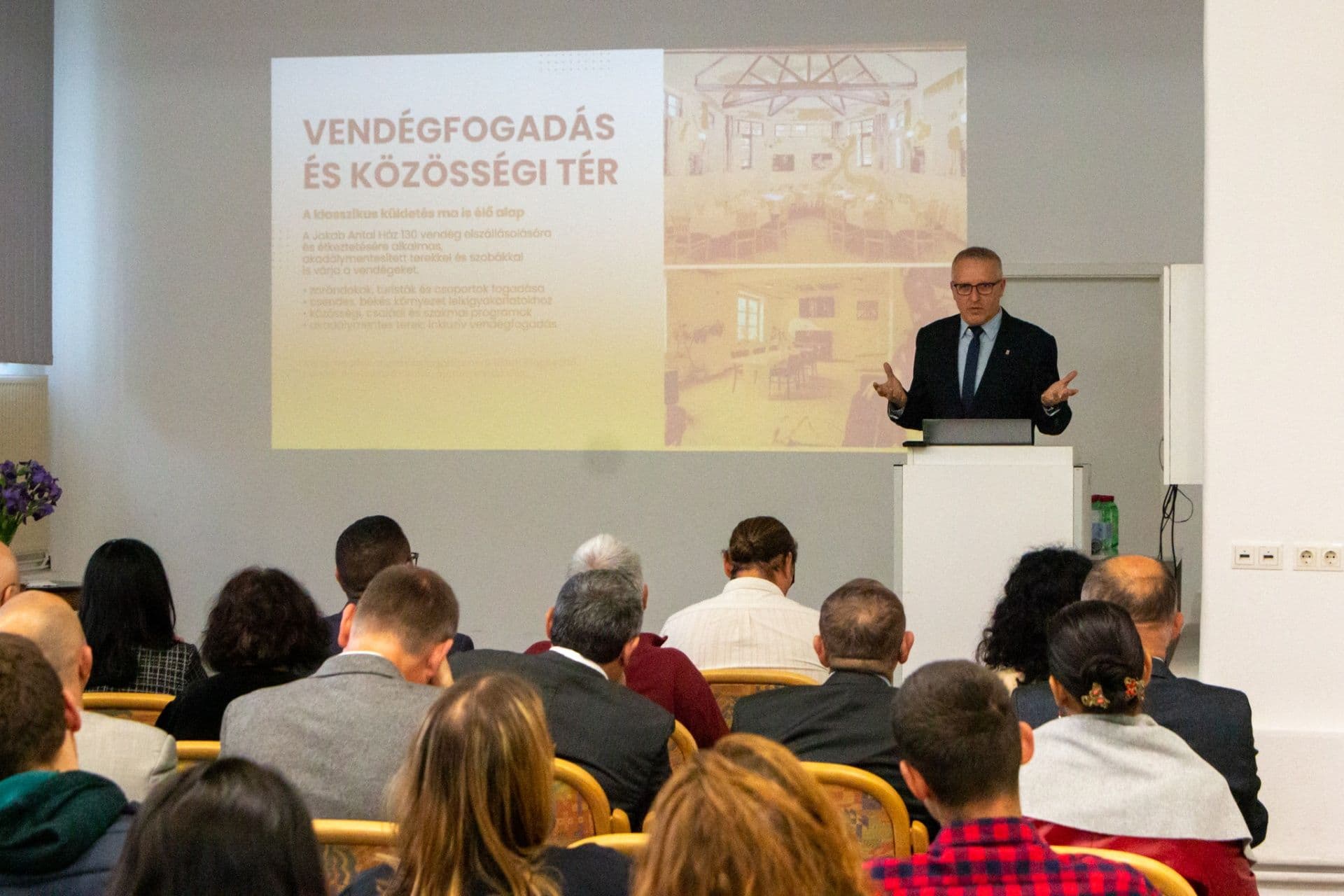
The series of festive addresses was opened by Bishop Emeritus József Tamás, who said: “I have felt and experienced that this House has brought prestige to this place and indeed to the entire region.” In his speech, he drew a parallel between his appointment as bishop and the beginnings of the House. He emphasised that over the past three decades, the building has become a place not only for academic pursuits, but also for deepening Christian spirituality and social awareness.
Szász János, former director of Caritas, recalled the difficulties of the early years: “Dreaming of and building this House was the result of the hard work of so many people.” He spoke about the technical and financial challenges of the 1990s, inflation and the difficulties of communication at a time when messages still arrived by telex. He also expressed his gratitude to the designers and to everyone whose faith and work made the realisation of this dream possible.
The reflections of Dr Vencser László, founder of the institution, were read by a colleague: “The study centre was built through human solidarity.” The essence of his message was that the House is an intellectual centre established through European cooperation. Bearing the name of Bishop Jakab Antal, it serves knowledge and Christian values and welcomes with open doors all those who wish to develop. The publication, bookmark and exhibition prepared for the occasion, as well as Csúcs Mária and Csúcs Péter’s film about the institution’s thirty-year history, added special significance to the event.
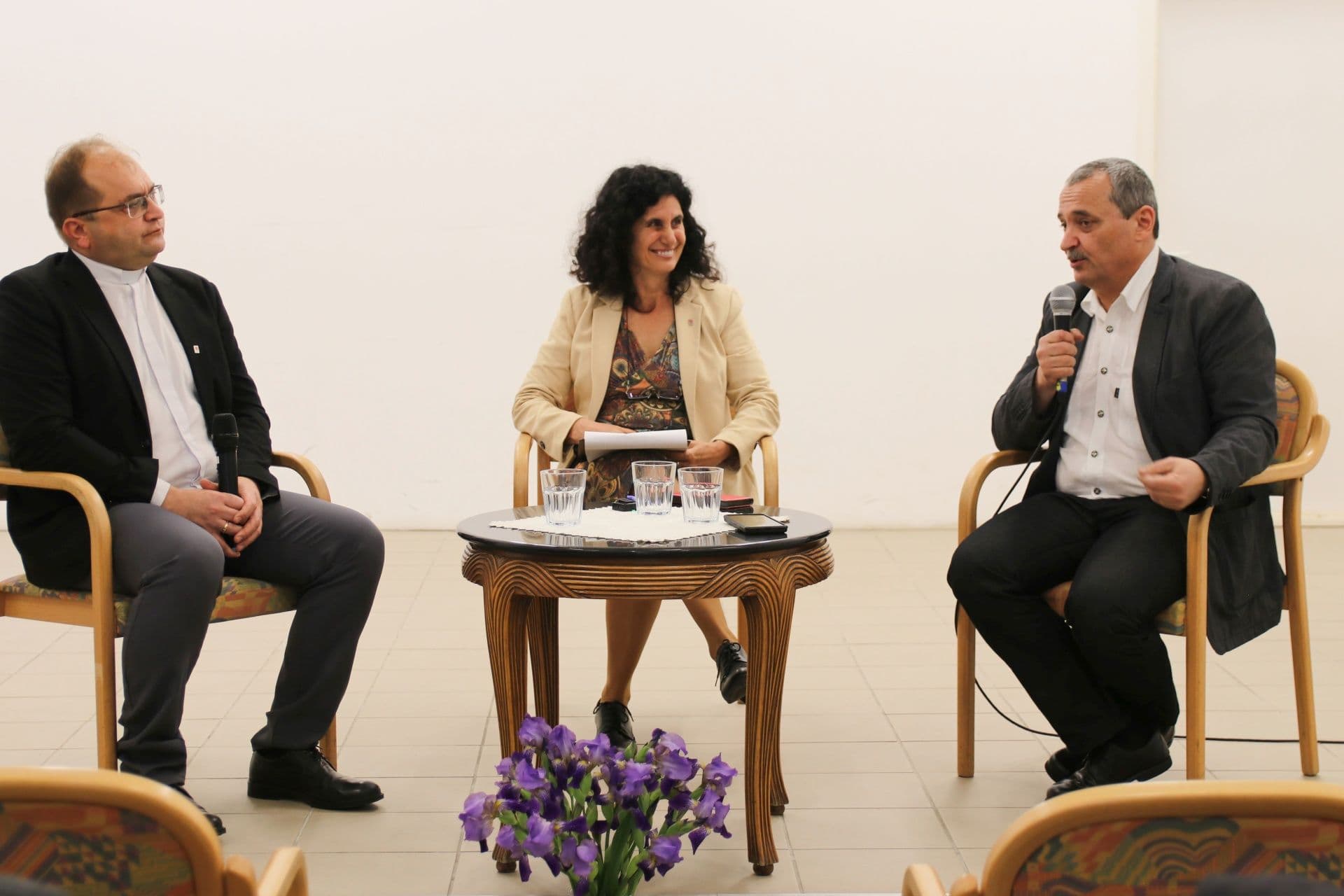
During a round-table discussion featuring directors Dr Márton András and Fr Sajgó Balázs, the conversation moved from memories of the past to a vision for the future. They recalled the importance of the House in vocational training and highlighted the visit of Pope Francis, which symbolically sealed the institution’s three pillars: charity, education and spirituality. Looking to the future, they described the House as a place for healing communities, where a culture of cooperation can help break down the walls of mistrust inherited from the past.
Archbishop Dr Kovács Gergely spoke about his personal connections to the House and recalled the conference organised there by the Holy See in 2001, which he himself had coordinated. He emphasised the exemplary and deliberate cooperation between the Archdiocese and Caritas, thanks to which the House hosts numerous important ecclesiastical events, formation programmes for priests and meetings of diocesan councils. The Archbishop stressed that the future of the House lies in continued service – not in the splendour of the building, but in the work carried out for the benefit of people.
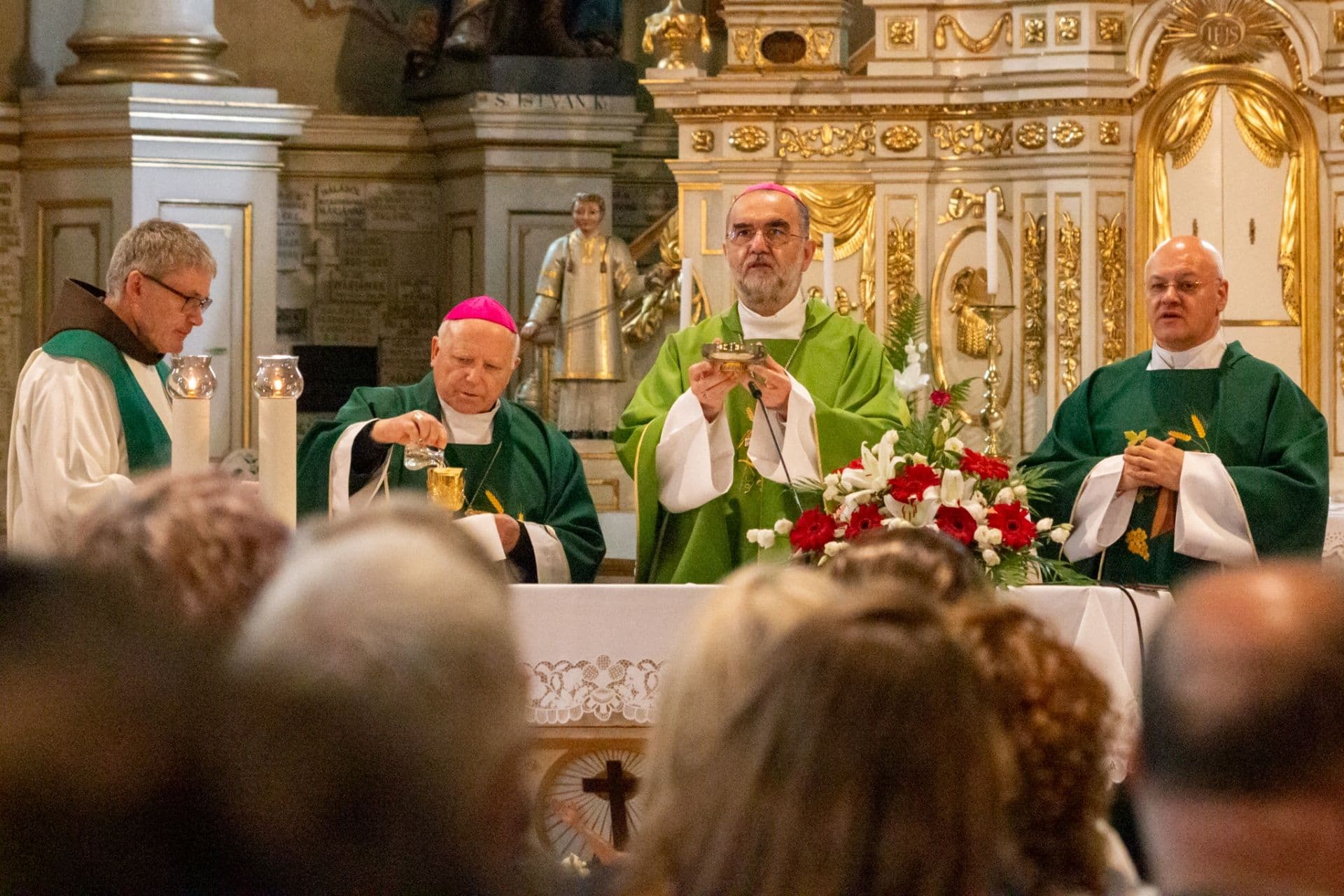
The Gospel reading at the jubilee Mass (Mark 12:13–17) focused on the teaching: “Give to Caesar what belongs to Caesar, and to God what belongs to God.” In his homily, the Archbishop explained that this answer was not a diplomatic manoeuvre, but the restoration of the proper order – a principle that is also fundamental to Jakab Antal House. Within this House, Church and world, faith and knowledge are present together. The Archbishop explained that regardless of the activity being undertaken – whether hospitality, social assistance or training – the ultimate goal is always to preserve human dignity and to make God’s love visible through concrete acts of service.
At the end of the jubilee Mass, the employees of the House offered prayers of intercession for the Holy Father, the institution’s leaders, the success of its training programmes, and the eternal rest of deceased colleagues and benefactors. The celebration concluded with a shared lunch, during which the participants gave thanks for the blessings of the past three decades in the joy of fellowship.